

Cownose Ray
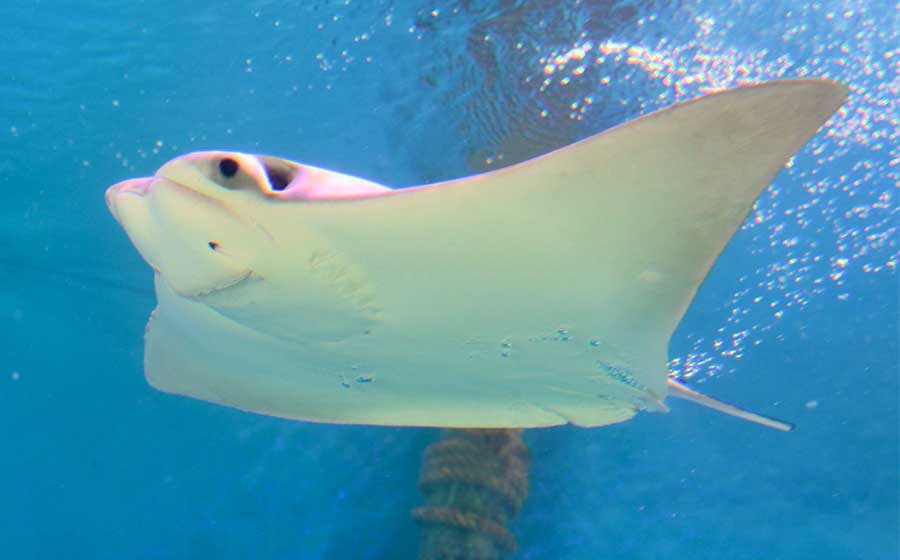
Cownose rays are strong, social swimmers often seen moving together. Several have been born right here at Mertailor's Mermaid Aquarium Encounter.
Interactive stingray touch tank in Citrus County
Graceful, curious, and surprisingly gentle, the rays at Ray Bay offer one of the most interactive experiences at our indoor aquarium near Crystal River, Florida.
This unique touch tank gives guests the opportunity to get close to several ray species while learning how they move, feed, sense their surroundings, and contribute to healthy aquatic ecosystems.
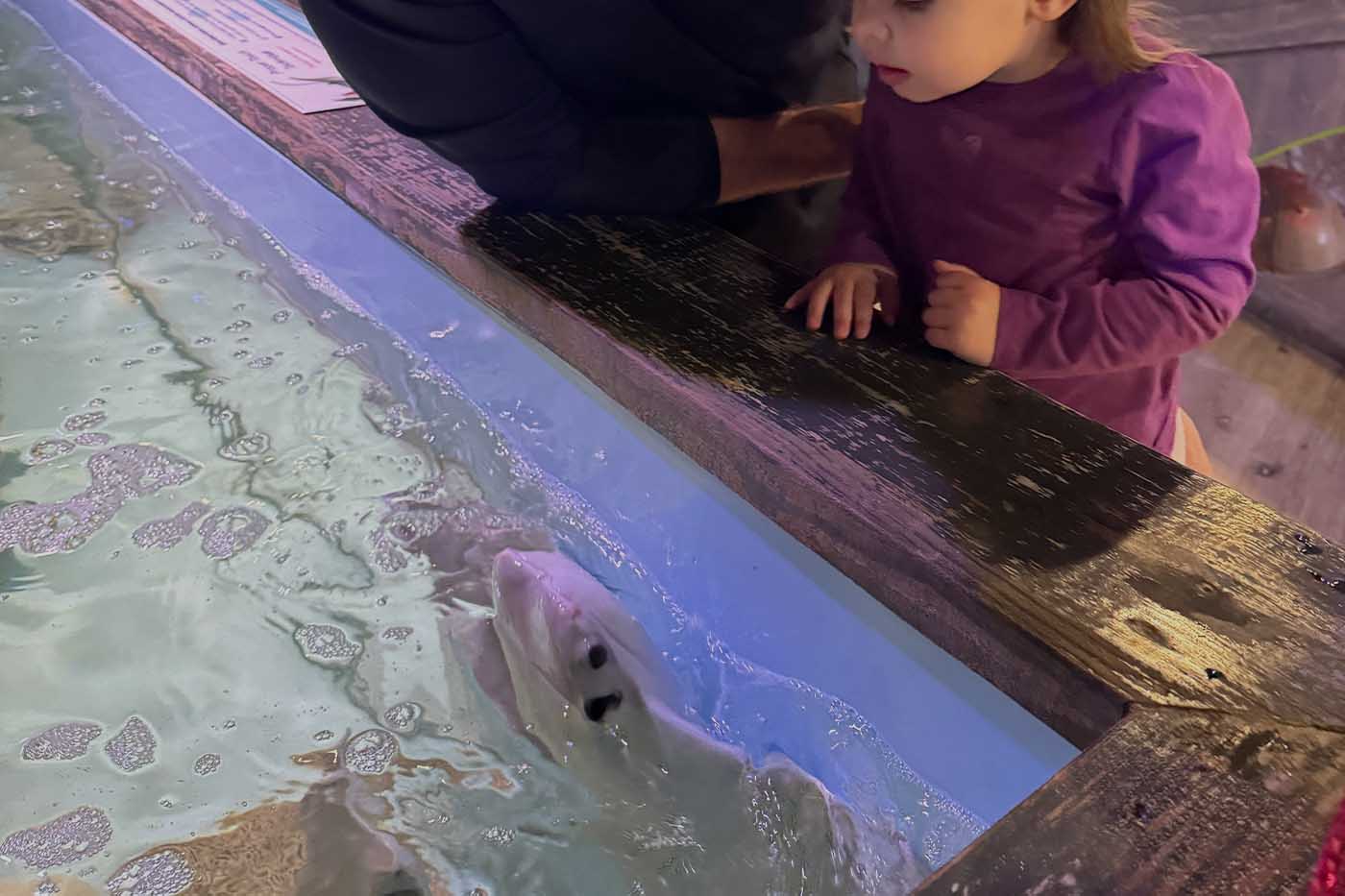
At Ray Bay, guests do more than watch from behind glass. Under staff supervision, visitors can gently touch the rays as they glide through the shallow habitat and may also have the opportunity to participate in a ray feeding.
These close encounters encourage guests to slow down, observe each animal's behavior, and discover how different rays respond to their environment.
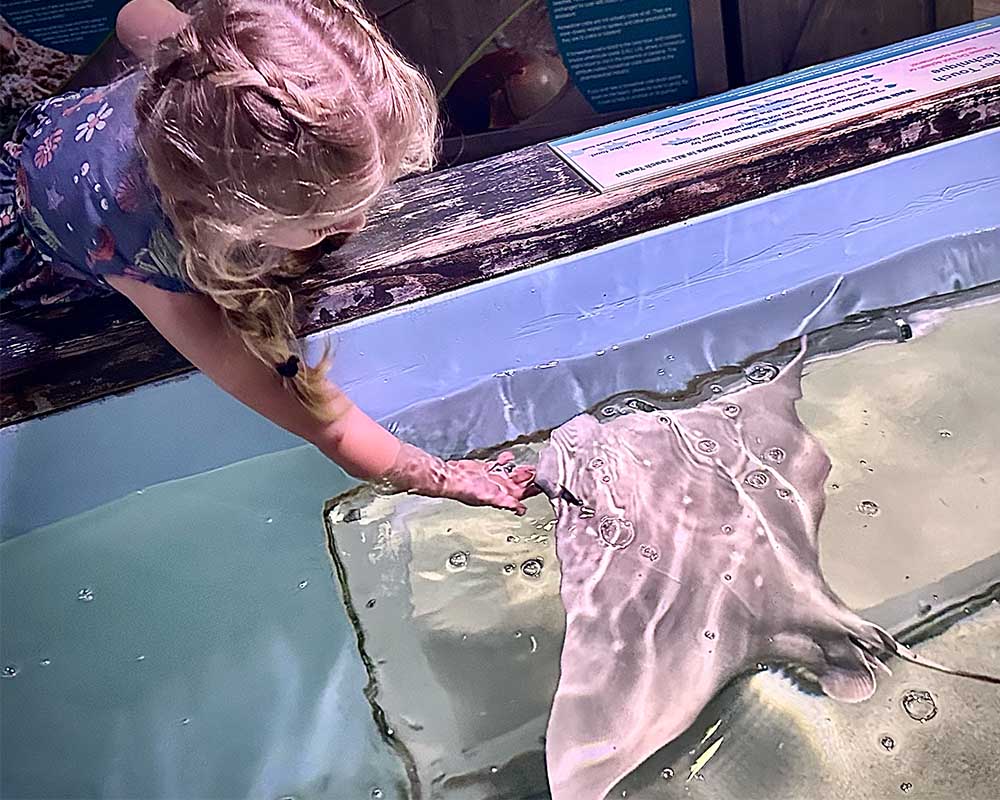
Stingrays are often misunderstood. While they do have natural defenses, they are not animals that seek out conflict with people. At Ray Bay, guests can observe their calm movement and curious behavior while learning why wild rays should always be given space and respect.
A stingray's defensive structures are meant for protection. They are not used to hunt, and rays generally prefer to move away from a perceived threat.
Rays can learn routines, recognize feeding opportunities, and approach familiar areas of their habitat with confidence.
Positive experiences in human care should also teach us to avoid chasing, crowding, touching, or disturbing wild rays.
Rays are important members of marine ecosystems. Many search through sand and sediment for prey, helping influence shellfish populations and the activity of animals living on or beneath the seafloor.
Many rays are adapted to life near the bottom, where they uncover food and interact with habitats that are easy for people to overlook.
Rays act as both predators and prey, connecting different levels of marine food webs.
From schooling cownose rays to bottom-dwelling stingrays and guitarfish, each species is adapted for a different way of life.
Healthy habitats, responsible fishing practices, and informed choices all help protect rays and the ecosystems they depend upon.
Ray Bay is home to a variety of native and non-native rays. Species and individual visibility may vary because each animal chooses where to rest, swim, or interact within the habitat.
Cownose rays are strong, social swimmers often seen moving together. Several have been born right here at Mertailor's Mermaid Aquarium Encounter.
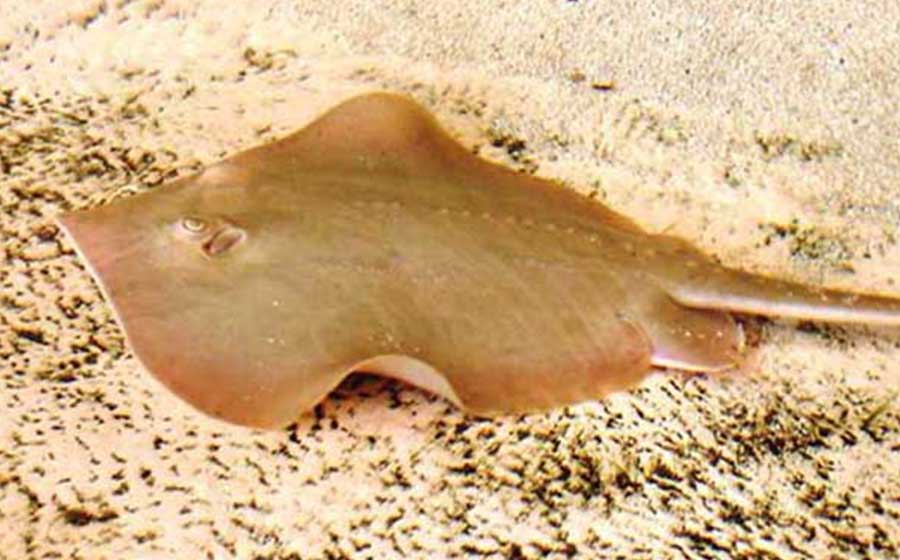
This Florida native is commonly associated with shallow coastal waters and can also enter brackish and freshwater habitats.
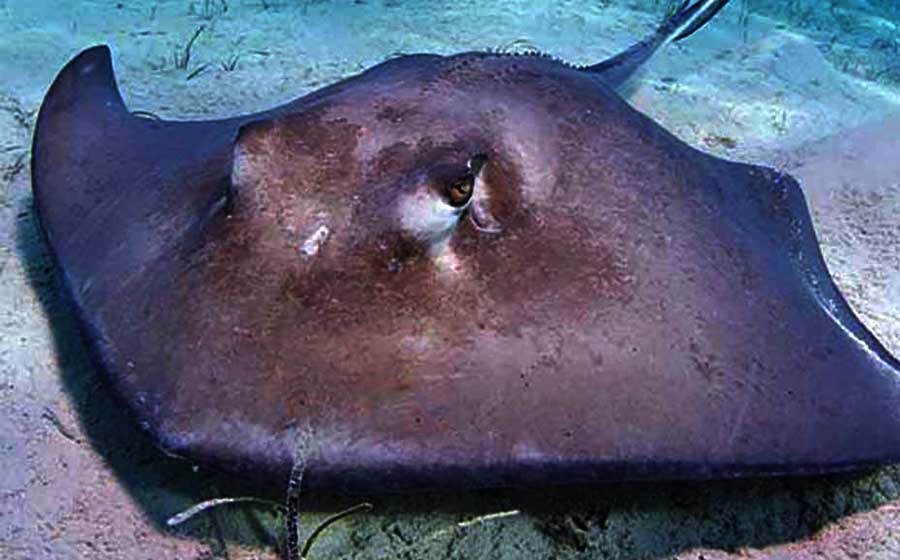
These sleek Pacific rays are named for the broad diamond-like shape formed by their pectoral fins.
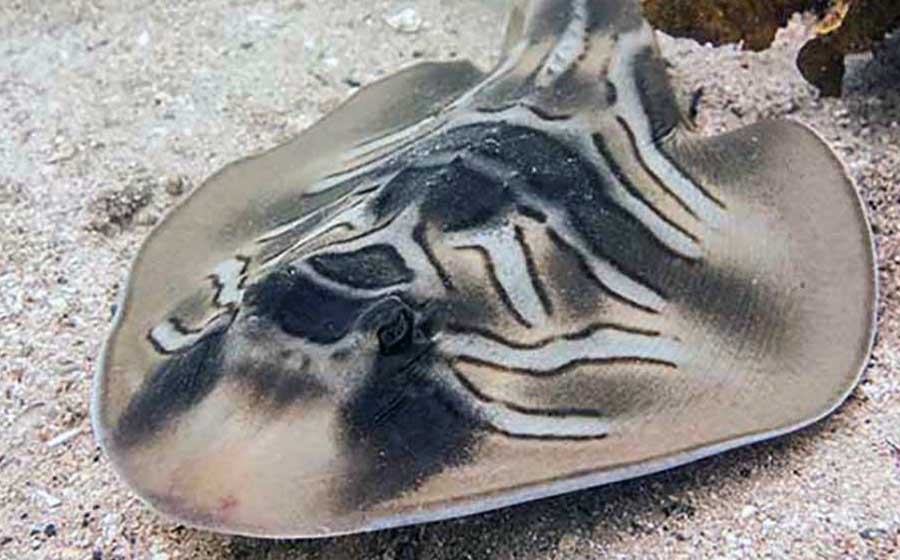
Sometimes called a banjo ray, this unusual animal has a body shape that visually bridges familiar rays and more shark-like forms.
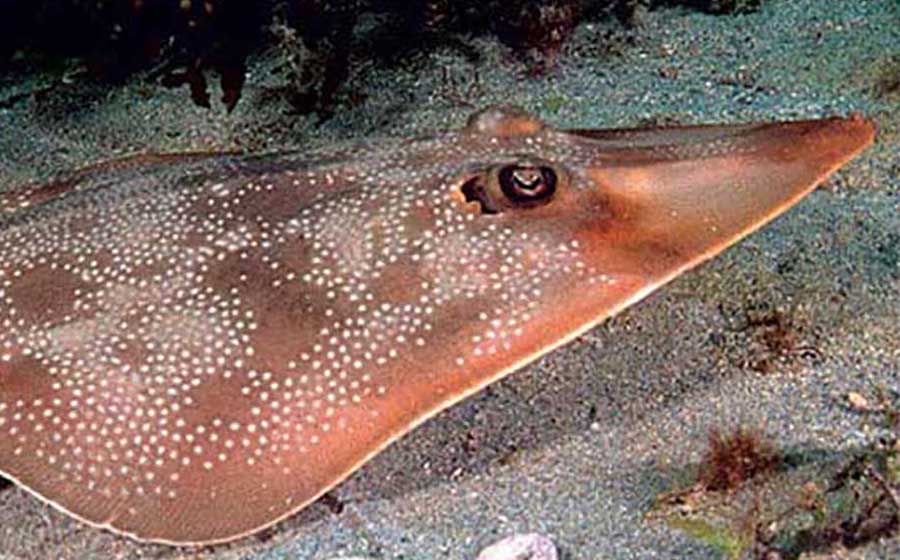
Guitarfish are rays with flattened heads and shark-like tails, making them an excellent example of the diversity within sharks and rays.
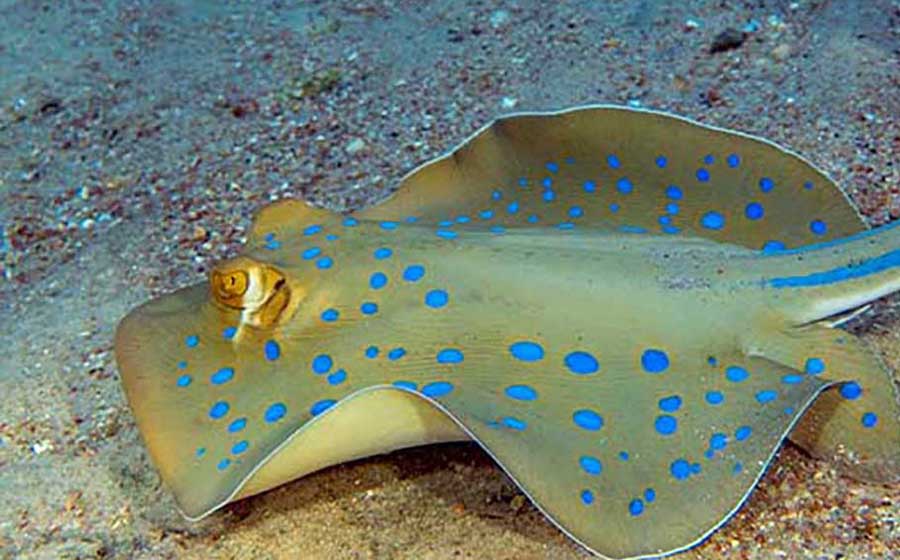
This smaller, colorful ray is easily recognized by the brilliant blue spots and markings across its body.
Several cownose rays have been born at Mertailor's Mermaid Aquarium Encounter, giving our team the opportunity to observe pregnancy, birth, early development, feeding, growth, and social behavior.
These births also create meaningful educational moments for guests, helping explain that rays are closely related to sharks and that different species reproduce in different ways.
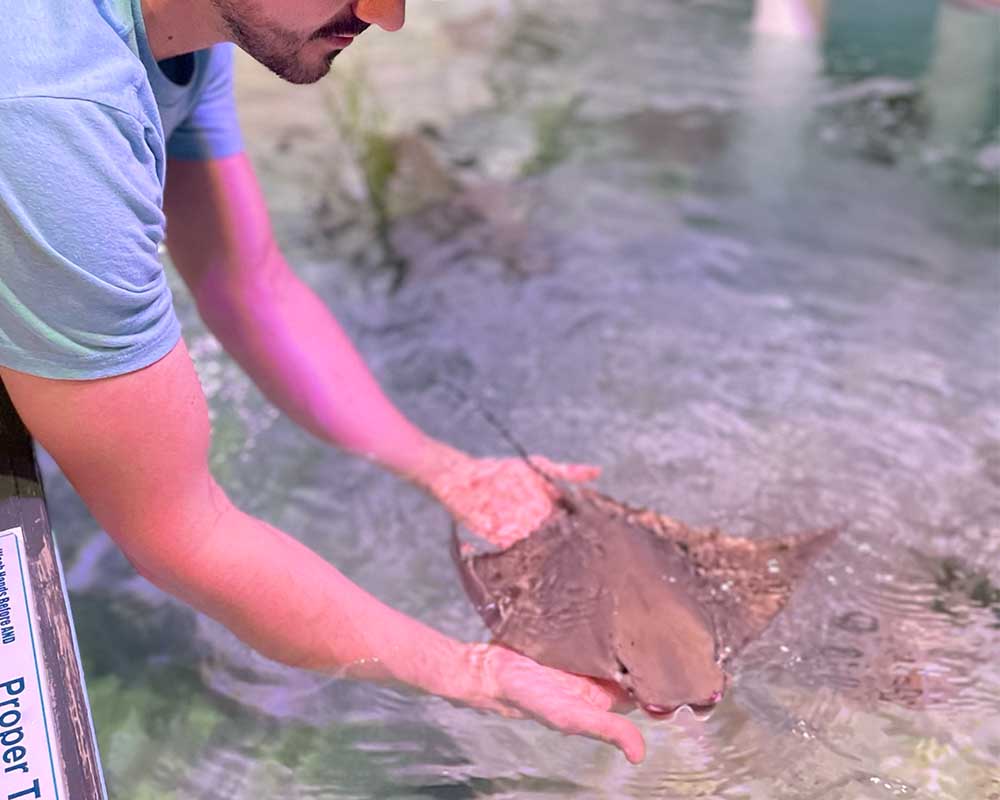
Make your Ray Bay experience even more memorable with a ray feeding add-on when available.
Follow staff instructions as a ray approaches and takes food. This supervised experience gives guests a close look at the way rays locate, handle, and consume their meals.
Ray feeding availability may vary by day, animal needs, and operational conditions. Ask a team member about current opportunities during your visit.
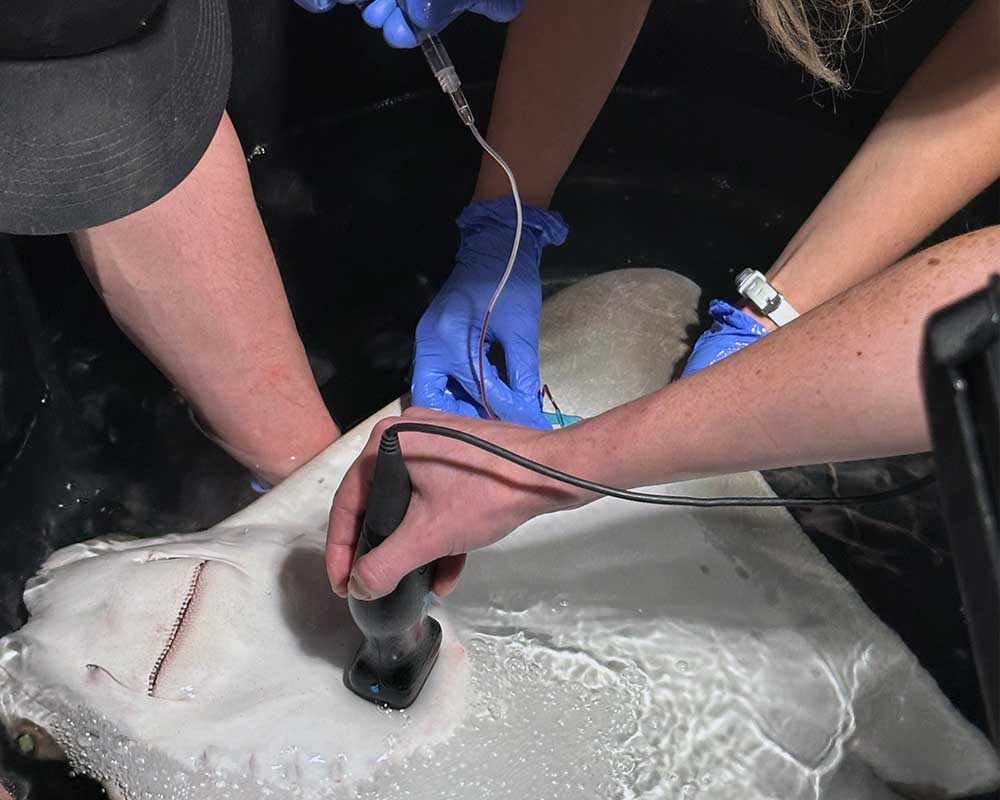
Every interaction guests enjoy at Ray Bay is supported by dedicated animal care behind the scenes. Our aquarists routinely monitor the health, behavior, appetite, and overall well-being of every ray in our collection.
Routine health examinations, diagnostic testing, and close observation help our team recognize changes early and make informed decisions for each animal. When additional evaluation or treatment is needed, we collaborate with aquatic veterinarians and other zoological professionals to provide specialized care.
Yes. Ray Bay is a supervised touch tank where guests can gently interact with the rays while following instructions from our aquarium team.
A ray feeding add-on may be available during your visit. Ask our team about current options when you arrive.
Stingrays are generally not aggressive animals. They have natural defenses, but they usually prefer to move away from a threat rather than confront it.
Ray Bay may feature cownose rays, Atlantic stingrays, diamond rays, fiddler rays, Atlantic guitarfish, and bluespotted rays.
Yes. Several cownose rays have been born at Mertailor's Mermaid Aquarium Encounter.
Ray Bay is part of the aquarium experience. Optional feeding activities may require an additional purchase.
Not necessarily. Each ray is an individual and chooses when to swim near the interaction area, rest, or move elsewhere in the habitat.
Mertailor's Mermaid Aquarium Encounter is located at 4100 W Gulf to Lake Hwy, Lecanto, FL 34461, in Citrus County near Crystal River.
Plan a visit to Mertailor's Mermaid Aquarium Encounter and discover Ray Bay, sharks, touch tanks, marine exhibits, and live underwater mermaid shows in one indoor Citrus County attraction.
Mertailor's Mermaid Aquarium Encounter
4100 W Gulf to Lake Hwy, Lecanto, FL 34461